Controlled issuance and redemption
Evaluate approved-recipient issuance, policy epochs, transfer restrictions, frozen-holder handling, redemption-related burns, controller-supply updates, and Audit evidence.
KCC20 Regulated gives stablecoin, wrapped-asset, and controlled-token issuers a guided environment for rulebook governance, Registry-linked issuance, policy-controlled transfers, lawful-control demonstrations, supply accounting, and consolidated Audit evidence.
KCC20 Regulated is designed around the operating problems that appear after token creation: who may receive the asset, how policy changes are published, how controls are authorized, how supply is reconciled, and how evidence is assembled for review.
Evaluate approved-recipient issuance, policy epochs, transfer restrictions, frozen-holder handling, redemption-related burns, controller-supply updates, and Audit evidence.
Model issuance tied to an external custody or deposit decision, governed circulation, withdrawal or redemption burns, and final supply reconciliation.
Explore tokenized deposits, permissioned settlement assets, institutional credits, membership value, loyalty programs, and other policy-controlled instruments.
The regulated workspace organizes the full lifecycle into focused tabs so policy design, token operations, controls, and evidence remain understandable.
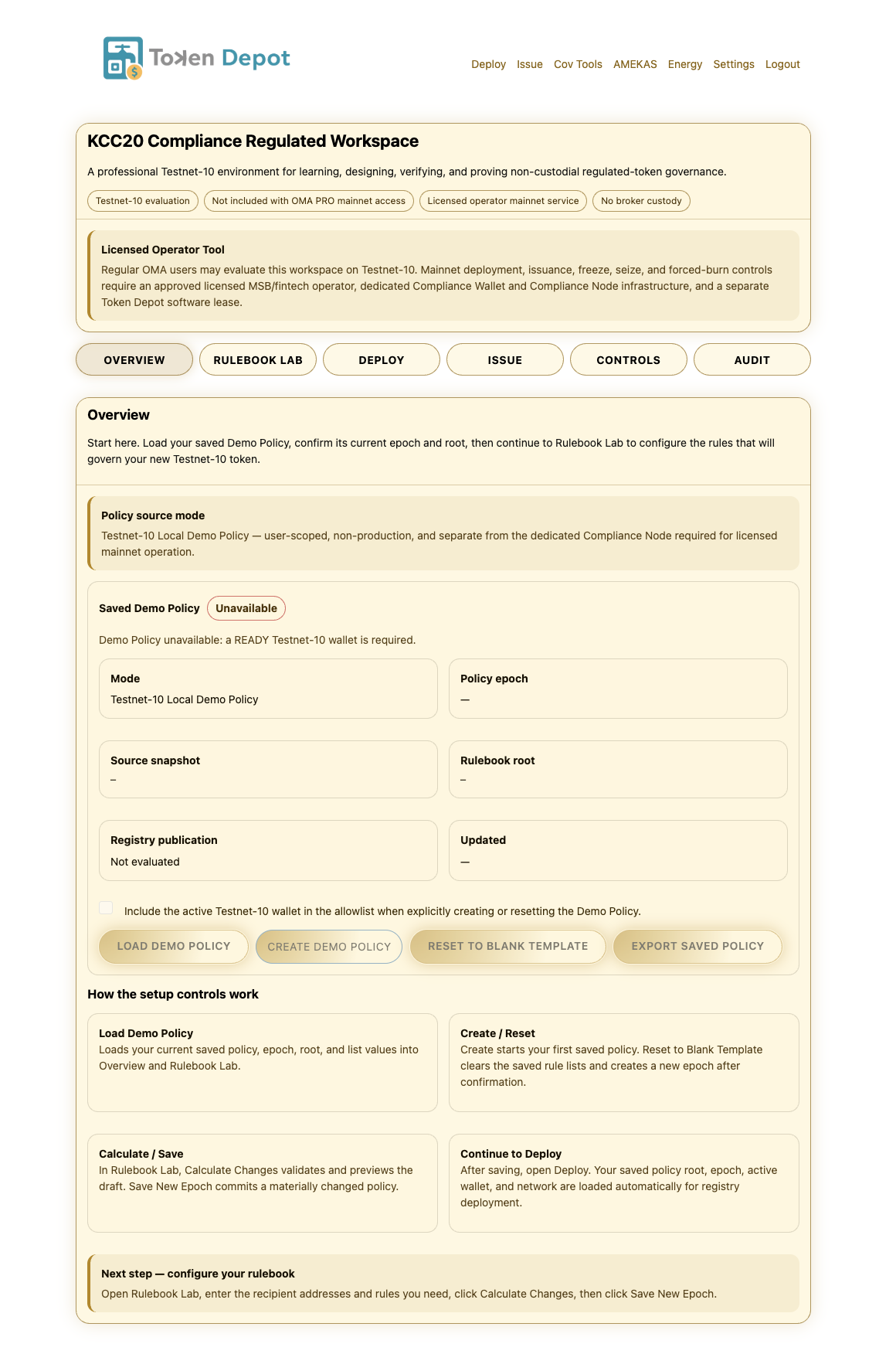 1
1
See wallet readiness, policy state, Registry status, regulated token selection, and the next required step.
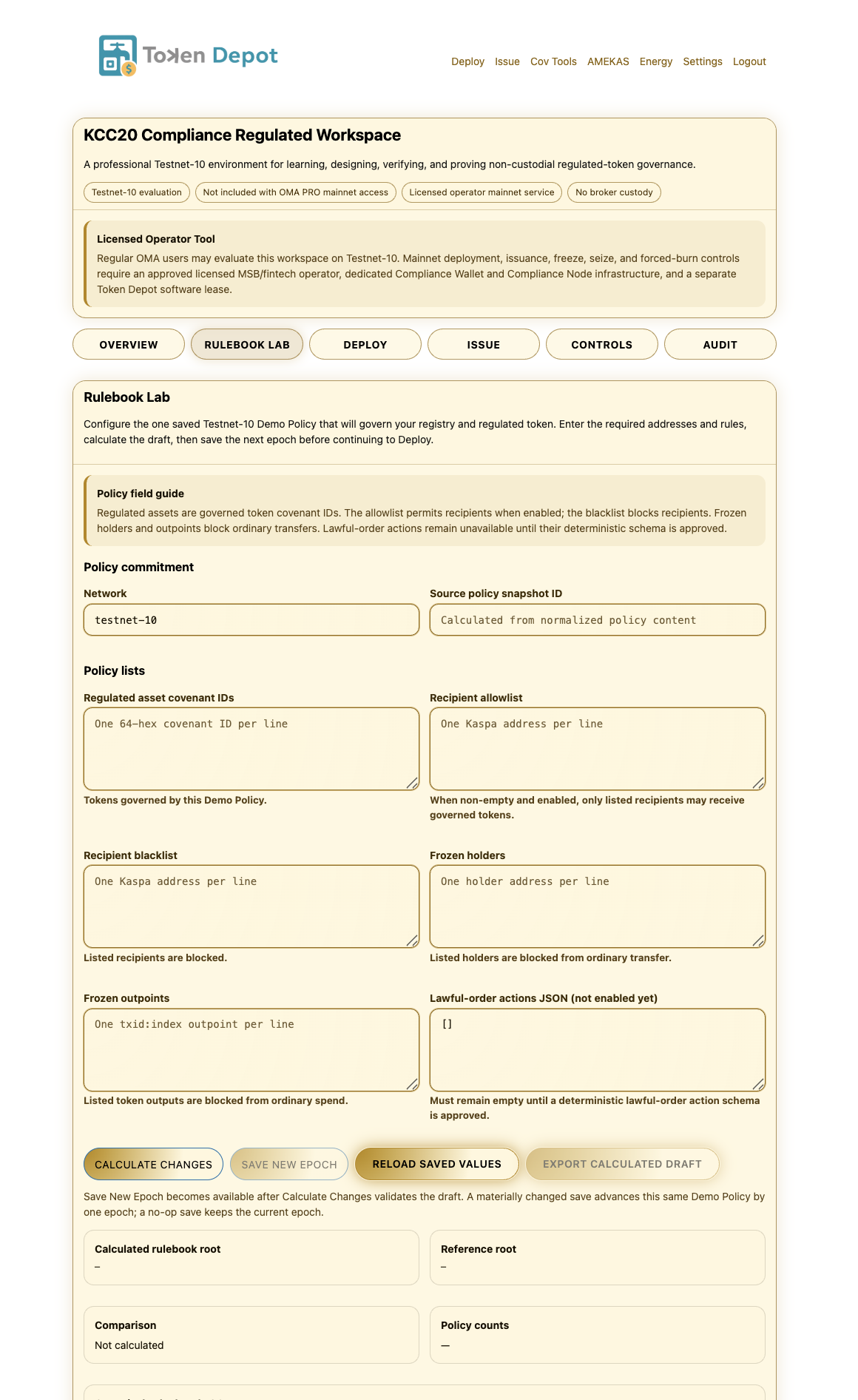 2
2
Create and update allowlists, blacklists, frozen holders, policy epochs, normalized rulebooks, and rulebook roots.
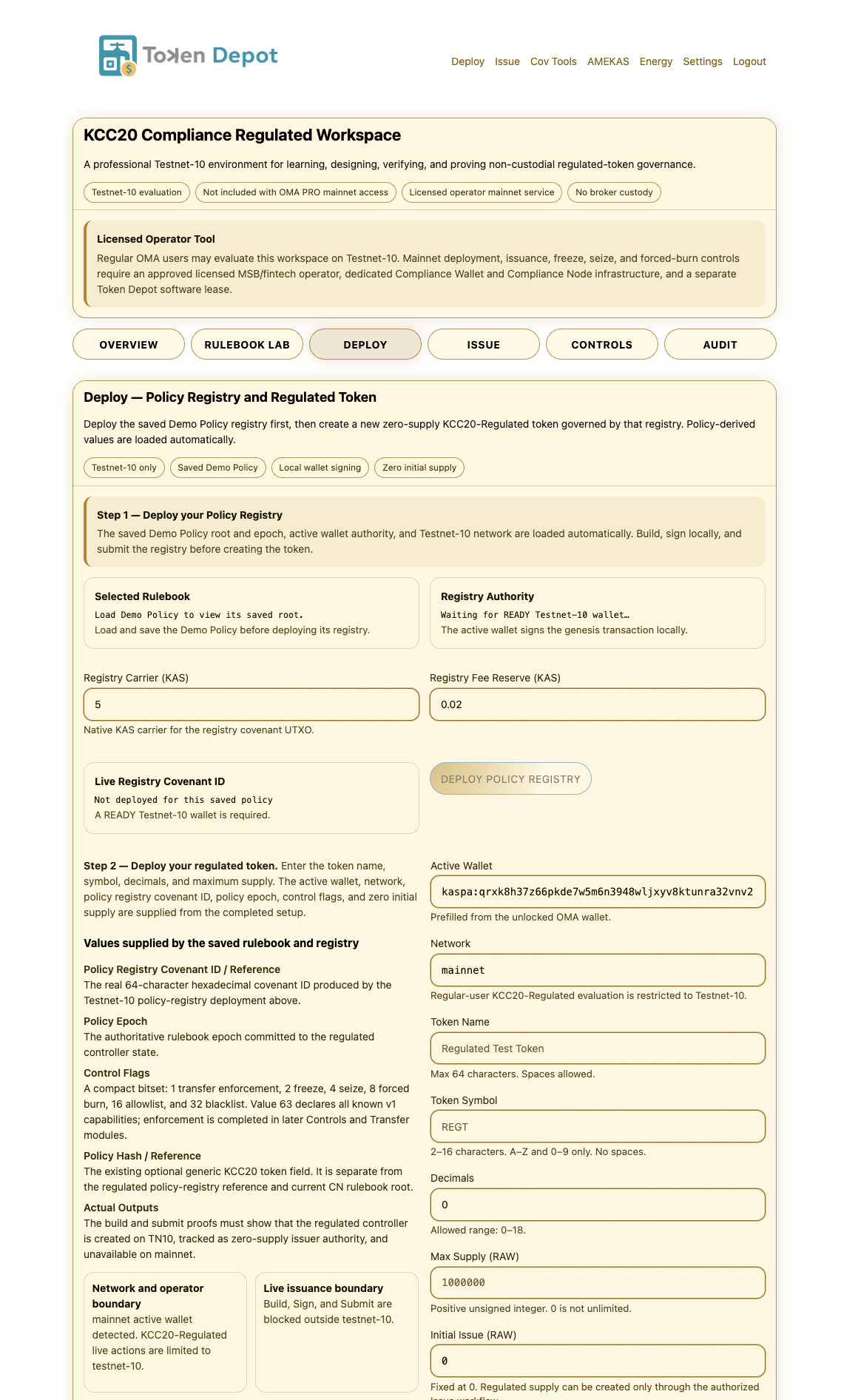 3
3
Create a regulated KCC20 token with zero initial supply and bind its profile to the policy Registry reference.
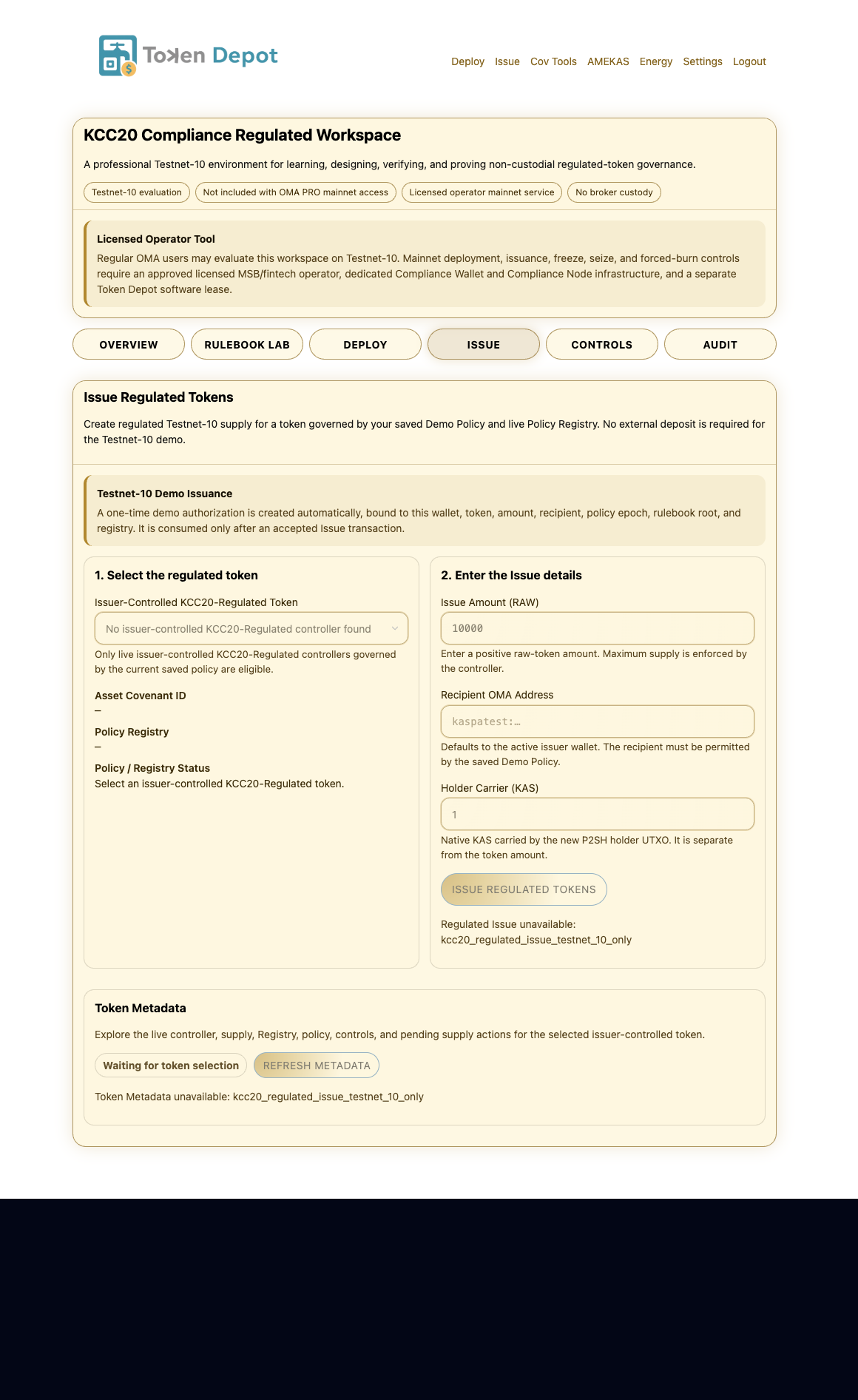 4
4
Authorize and issue supply to an eligible recipient, then review tracked holdings, metadata, and controller supply.
 5
5
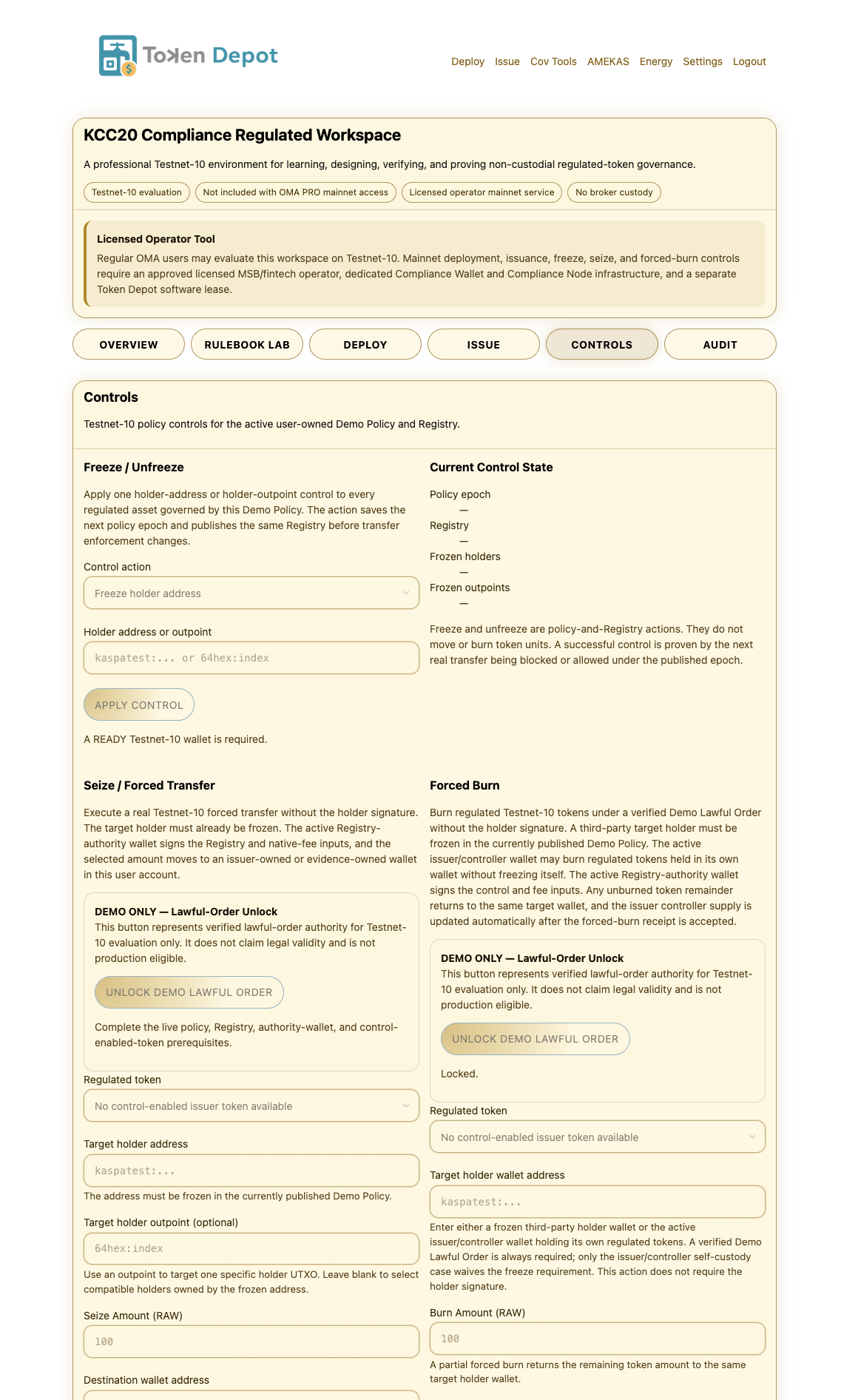
Evaluate Freeze, Unfreeze, Registry-authorized Seizure, Forced Burn, and controller-supply reconciliation.
 6
6
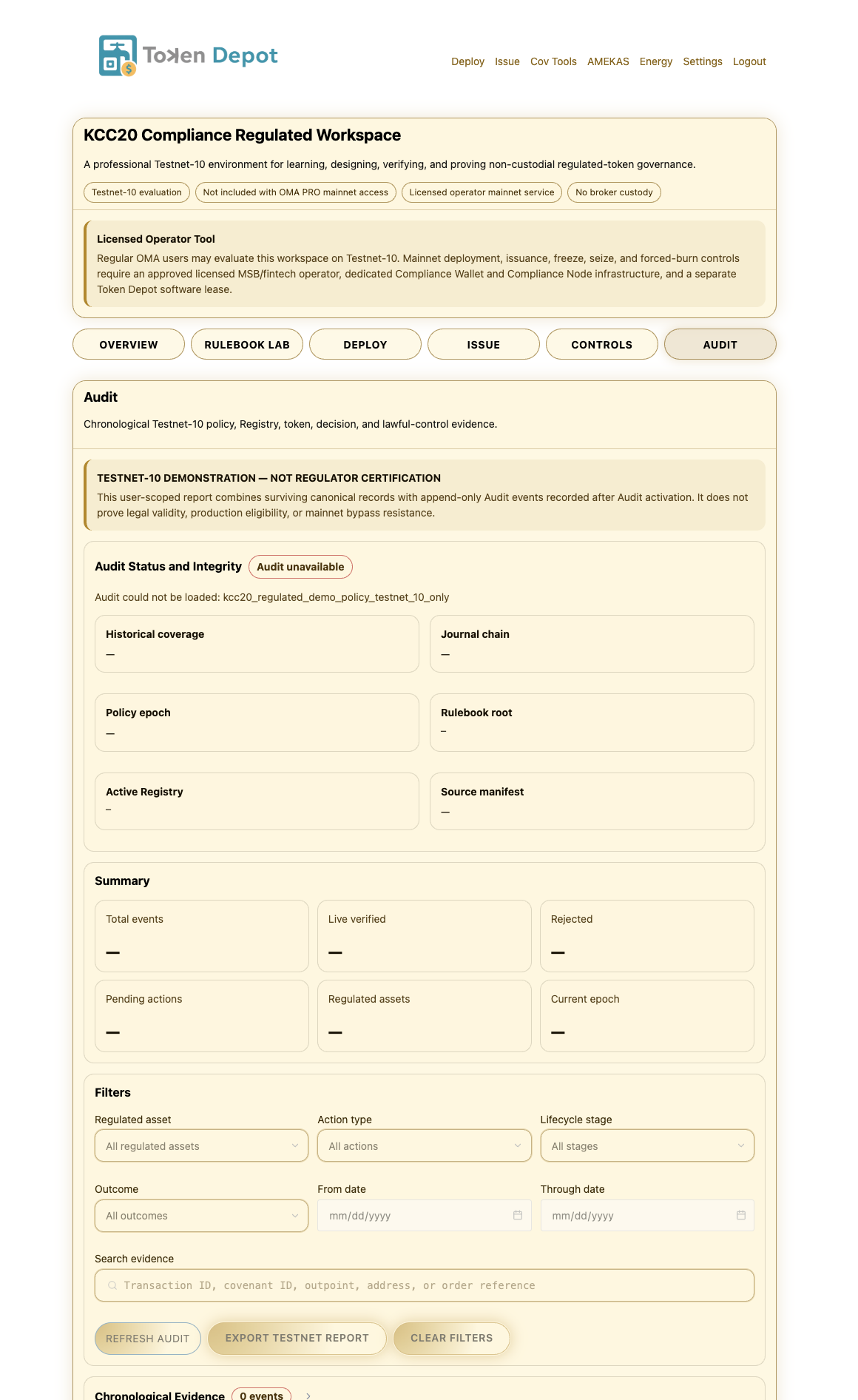
Review chronological evidence, filters, chain integrity, source coverage, pending actions, and exportable Testnet reports.
The workspace treats issuance as one stage in a governed lifecycle rather than the finish line.
The examples below show how external issuer decisions can connect to the KCC20 Regulated lifecycle. Banking, custody, reserve, attestation, and deposit-verification systems remain issuer-specific production integrations.
An issuer can bind approved reserve or issuance decisions to policy-aware token operations and preserve evidence across the lifecycle.
A wrapped-asset operator can use external custody or lock verification to authorize issue, then govern circulation and withdrawal-related burns.
KCC20 Regulated separates policy administration from wallet custody while keeping the operating evidence connected.
Authors, normalizes, publishes, and administratively tracks rulebooks, Registry state, policy epochs, and operator decisions.
Evaluates policy, plans transactions, verifies Registry references, tracks regulated records, reconciles supply, and projects Audit evidence.
Holds wallet credentials locally and presents intentional review, unlock, signing, and submission steps to the user or operator.
Signatures, UTXO settlement, transaction lineage, covenant identity, and on-chain state remain anchored to Kaspa.
Transfer planning can evaluate current rulebook state before the operator signs and submits a token action.
Policy, Registry, issue, transfer, control, burn, and controller-supply evidence can be reviewed in one user-scoped journal.
Current availability is Testnet-10 issuer evaluation. A production launch requires dedicated infrastructure, approved governance, documented operating procedures, recovery and Audit planning, customer-specific external integrations, and a separate commercial agreement.
Use KCC20 Regulated to evaluate the policy, token, controls, accounting, and Audit lifecycle for your stablecoin, wrapped asset, or controlled-token program.